It's pear season! In his delightful AT THE CORNER OF FACT & FANCY, Jonathan Kolatch explains why "The Pear Is a Prima Donna!"
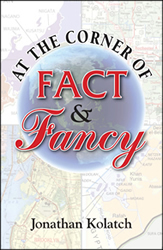

This abbreviated excerpt from AT THE CORNER OF FACT & FANCY gives the often under-appreciated pear the attention it deserves.
Between the king of summer—sweet corn—and the prince of autumn—the apple—stands the neglected, misunderstood pear. Long live the pear!
Around these parts [Dutchess County in the State of New York], the main pear crop, Bartlett, comes in around the end of August—a full month before the main-season Macs. But don’t berate the pear for its precocity; it’s got staying power: the Seckel and Anjou toward the end of September, the Bosc toward the middle of October, and in between a host of lesser-known varieties—Gorham, Flemish beauty, Clapps Favorite, Kieffer—all with distinctive tastes and very touchy personalities.
*****
Pears have
never achieved the popularity of apples, and for one basic reason:
People don’t really understand the nature of a pear. If they did, they would realize that, properly handled, the pear is one of the few fruits that can be eaten at full flavor without ever going near an orchard.
First, a
little pear science.
Left to ripen on the tree, the pear will turn gritty and mealy, with a lumpy consistency. Picked just before it would have started to ripen on its own (within a harvest span of a week to ten days), and allowed to ripen off the tree, the pear will develop a smooth texture—what the textbooks call a “melting” quality—and full flavor. . .
The pear is a
prima donna. It has its demands . . . and it isn’t a compromiser . . .
If you look carefully at a pear about a month before it is ripe, you will notice white-colored dots—lenticels—all over its surface. It takes a little experience to observe the transition, but as harvest nears, the lenticels “cork over,” becoming brown and more distinct. At the same time, the background color of the fruit lightens. This is when a pear should be picked; when it’s still hard. And that’s when the pear should be purchased . . .
READ MORE ABOUT
RIPENING AND ENJOYING THIS DELICIOUS FRUIT IN JONATHAN KOLATCH’S AT THE
CORNER OF FACT & FANCY.